

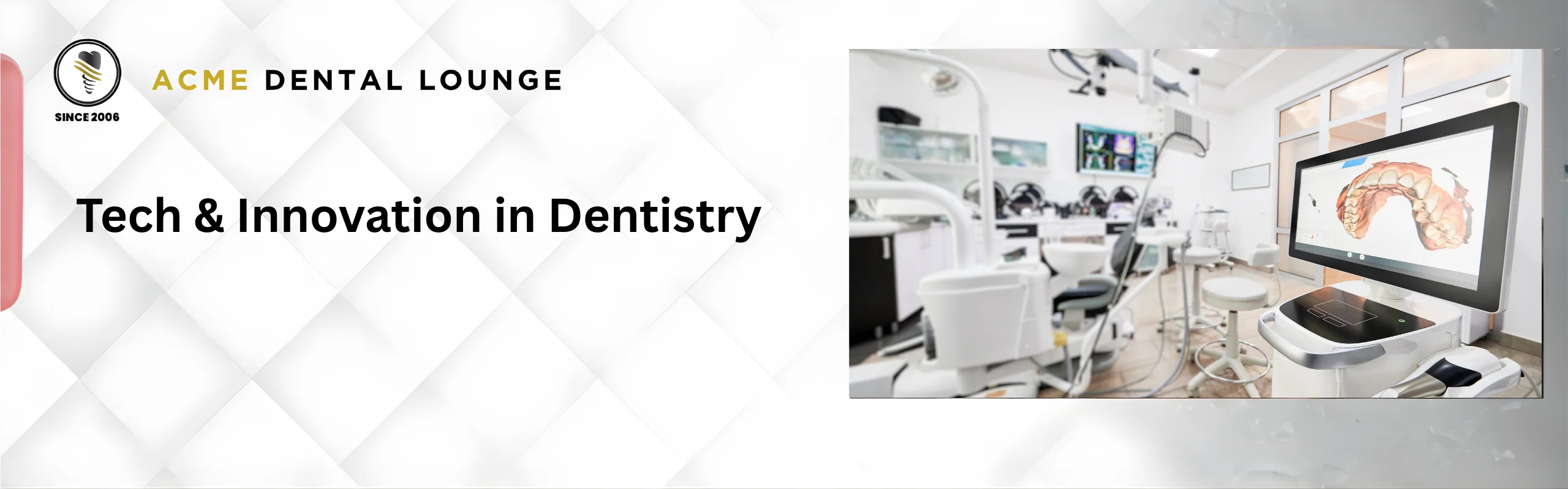
Tech & Innovation in Dentistry
“Al in Dentistry: How Artificial Intelligence is Changing Dental Care”
“The Rise of 3D Printing in Dental Implants and Orthodontics”
Tech & Innovation in Dentistry: How Modern Technology Is Transforming Dental Care
Dentistry is no longer about routine check ups now Modern dentistry is becoming more precise, personalised, and patient-friendly than ever before, because of rapid technological breakthroughs From artificial intelligence supporting diagnosis to 3D printing personalised implants and smart gadgets boosting daily oral hygiene, Innovation is transforming how we care for our teeth.
Let’s look at three significant technology advances that are transforming dentistry today
Al in Dentistry: How Artificial Intelligence Is Changing Dental Care
Artificial Intelligence (AI) is playing a growing role in dental clinics around the world. By using machine leaming and data analysis, Al systems can support dentists in making faster and more accurate clinical decisions
How Al Is Used in Dentistry
Improved Diagnosis. Al-powered software analyses dentat X-rays and scans to discover cavities, bone loss, gum disease, and even oral malignancies in their early Stages, sometimes before symptoms occur.
- Personalised Treatment Planning: Artificial intelligence can analyse patient data to anticipate illness progression and suggest personalised treatment regimens
- Efficiency and Automation: Administrative tasks like appointment-scheduling, patient follow ups, and record administration can be automated to save time for patients as well as staff members.
- Improved Patient Communication: Al chatbots and virtual assistants may answer patient enquiries, provide reminders, and provide post-treatment care instructions.
Rather than replacing dentists, Al serves as a valuable helper, increasing accuracy, decreasing errors, and improving overall patient outcomes
The Rise of 3D Printing in Dental Implants and Orthodontics
3D printing has emerged as one of the most important technologies in contemporary dentistry It provides unrivalled precision and customisation by converting digital Images into actital dental goods
Applications of 3D printing in dentistry
Dental Implants Custom implant guides and components can be manufactured to match a patient’s precise anatomy, enhancing fit and surgical precision
- Orthodontics: 3D-printed models are routinely used to create clear aligners and braces, which allow for gradual and accurate tooth movement.
- Crowns and bridges: Dentists can now make crowns, veneers, and interim restorations faster sometimes even on the same day.
- Surgical Planning Models: 3D-printed jaw and tooth models allow dentists to practise difficult procedures before performing them on patients
Benefits
- Faster treatment times.
- Solutions that are highly customised
- Reduced material waste
- Increased patient comfort and satisfaction.
3D printing improves the efficiency, affordability, and accessibility of dental procedures, particularly in implantology and orthodontics
Smart Toothbrushes and Oral Health Gadgets You Should Know About
Dental technology is no longer exclusive to clinics. By transforming daily routines into data-driven habits, smart oral health devices are assisting patients in maintaining better hygiene at home
Popular Intelligent Dental Health Devices
Smart toothbrushes: These brushes provide real-time feedback and coaching by tracking brushing time, pressure, and coverage using sensors and smartphone apps.
Plaque Detection Tools: To help customers clean more efficiently, certain technologies indicate plaque accumulation using light or artificial intelligence.
Digital Water Flossers: More sophisticated water flossers now monitor consumption trends and automatically adjust pressure.
Oral Health Monitoring Devices: New technologies can measure salivary acidity, dry mouth and gum disease symptoms
Why They Matter
- Encourage consistent, proper oral hygiene
- Help spot problems.cany
- Improve patient involvement and motivation
- Suppon preventive dentalcare
These devices allow people to take care of their oral health in between dental appointments.
Conclusion: The Future of Dentistry Is Digital
Technology is transforming dentistry into a more intelligent patient-cantered profession. Artificial intelligence improves diagnostics and efficiency, 3D printing provides precision and customisation, and sman oral health devices promote better everyday care Together, these advances improve patient outcomes and redefine the dental experience.
As technology advances, the future of dentistry offers quicker treatments, fewer complications, and healthier mouths for all.