

Root Canal Treatment: Everything You Need to Know
Clear Aligners vs. Braces: Which Is Better for Straightening Teeth?
Compare clear aligners vs. traditional braces based on treatment time, effectiveness, comfort, cost, maintenance, and age suitability. Learn which orthodontic treatment is right for you.
A straight, healthy smile is more than just a confidence booster—it also contributes to better oral health. If you’re considering orthodontic treatment, you’ve probably asked yourself one important question:
Should I choose clear aligners or traditional braces?
Both treatments are highly effective for correcting crooked teeth, bite issues, gaps, and overcrowding. However, they differ significantly in appearance, comfort, treatment duration, maintenance, and cost.
This comprehensive guide compares clear aligners vs. braces so you can make an informed decision based on your lifestyle, dental needs, and budget.
Quick Answer: Clear Aligners vs. Braces
|
Feature |
Clear Aligners |
Traditional Braces |
|
Appearance |
Nearly invisible |
Metal brackets visible |
|
Comfort |
Smooth plastic, less irritation |
Can cause slight irritation initially |
|
Removable |
Yes |
No |
|
Eating Restrictions |
None (remove before meals) |
Some food restrictions |
|
Oral Hygiene |
Easier |
little challenging |
|
Treatment Time |
Depend upon cases |
18–36 months |
|
Best For |
Mild to moderate cases |
Moderate to severe cases |
|
Average Cost |
Moderate to high |
Usually more affordable |
What Are Clear Aligners?
Clear aligners are custom-made, transparent plastic trays designed to gradually move teeth into their ideal position.
Each aligner is worn for approximately 1–2 weeks before progressing to the next set.
Popular benefits include:
- Virtually invisible appearance
- Removable during meals
- Comfortable design
- Easier brushing and flossing
- Suitable for many mild to moderate orthodontic cases
Patients typically wear aligners for 20–22 hours per day to achieve optimal results.
What Are Traditional Braces?
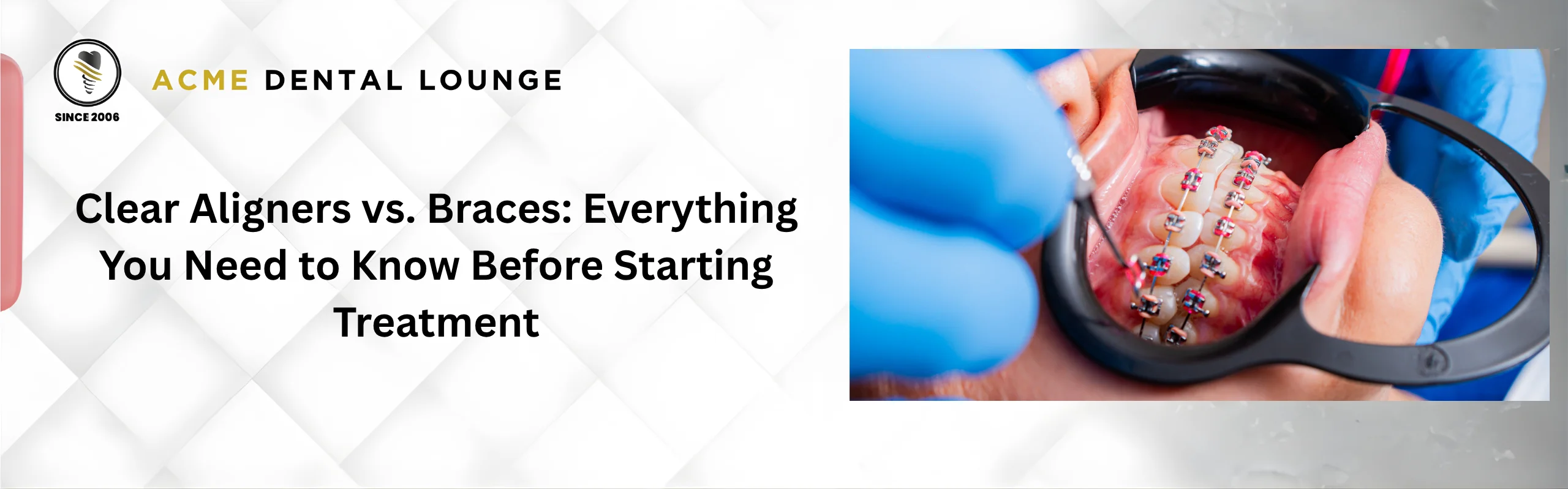
Traditional braces use metal or ceramic brackets attached to the teeth, connected by wires that are adjusted periodically by an orthodontist.
Braces have been successfully used for decades to treat:
- Severe crowding
- Complex bite problems
- Rotated teeth
- Jaw alignment issues
- Large spacing issues
Because braces remain fixed to the teeth, treatment progresses continuously without relying on patient compliance.
Treatment Time: Which Is Faster?
Treatment duration depends on the complexity of your orthodontic problem.
Clear Aligners
Average treatment time:
- Mild cases: 6–9 months
- Moderate cases: 12–18 months
- Complex cases: up to 24 months
Treatment can be faster because digital planning precisely maps tooth movement.
Traditional Braces
Average treatment time:
- Mild cases: 6–9 months
- Moderate cases: 12–18 months
- Severe cases: 24–36 months
Braces often require longer treatment but can achieve movements aligners may struggle with.
Effectiveness: Which Straightens Teeth Better?
This is one of the most common questions patients ask.
Clear Aligners Work Best For:
- Mild crowding
- Small gaps
- Minor bite correction
- Relapse after previous orthodontic treatment
- Cosmetic smile improvements
Braces Are Better For:
- Severe crowding
- Major bite correction
- Rotated teeth
- Teeth requiring significant movement
- Complex orthodontic conditions
- Comfort Comparison
Most patients report that aligners are more comfortable.
Clear Aligners
Pros:
- Smooth plastic edges
- No brackets or wires
- Less mouth irritation
- Fewer emergency appointments
Cons:
- Mild pressure when changing trays
Traditional Braces
Pros:
- Continuous tooth movement
Cons:
- Brackets may irritate cheeks
- Wire adjustments may cause soreness
- Occasional broken brackets or wires
Appearance: Which Looks Better?
Appearance matters for adults, professionals, and teenagers.
Clear Aligners
- Nearly invisible
- Excellent for professional settings
- Popular among adults
Braces
Options include:
- Metal braces
- Ceramic braces
Although ceramic braces are less noticeable, they are still more visible than clear aligners.
Eating and Lifestyle
Clear Aligners
Simply remove them before:
- Eating
- Drinking anything except water
There are no food restrictions.
Braces
Patients should avoid:
- Sticky candy
- Hard nuts
- Popcorn
- Ice
- Chewing gum
- Hard breads
Food can damage brackets and wires.
Oral Hygiene
Maintaining oral hygiene is easier with aligners.
Aligners
Brush and floss normally after removing the trays.
Braces
Cleaning requires extra effort using:
- Orthodontic brushes
- Interdental brushes
- Floss threaders
- Water flossers
Poor hygiene can increase the risk of plaque buildup and enamel staining.
Cost Comparison
Costs vary depending on the complexity of treatment, clinic location, and orthodontist experience.
|
Treatment |
Estimated Cost (India) |
|
Clear Aligners |
₹80,000–₹3,00,000+ |
|
Metal Braces |
₹60,000–₹80,000 |
|
Ceramic Braces |
₹70,000–₹1,50,000 |
Remember that the lowest price may not always provide the best value. The orthodontist’s expertise, treatment planning, follow-up care, and quality of materials all influence outcomes.
Which Is Better for Different Age Groups?
Children (7–12 Years)
Traditional braces are often preferred because:
- Permanent teeth are still erupting.
- Compliance with removable aligners may be challenging.
- Complex developmental issues are easier to manage.
Teenagers
Both options can be effective.
Clear aligners are suitable for responsible teens who can wear them consistently.
Braces are ideal for teens with severe orthodontic problems or those who may forget to wear aligners.
Adults
Adults frequently choose clear aligners because they:
- Are discreet.
- Fit professional and social lifestyles.
- Allow easier eating and oral hygiene.
- Require fewer dietary restrictions.
Pros and Cons
Clear Aligners
Pros
- Nearly invisible
- Comfortable
- Removable
- Easier oral hygiene
- No food restrictions
- Fewer emergency visits
Cons
- Must be worn 20–22 hours daily
- Easier to lose or damage
- May not suit every complex case
- Generally more expensive
Traditional Braces
Pros
- Highly effective for complex cases
- No risk of forgetting to wear them
- Usually more affordable
- Suitable for all age groups
Cons
- Visible appearance
- Food restrictions
- More difficult cleaning
- Possible irritation from brackets and wires
Factors to Consider Before Choosing
Ask yourself:
- How severe is my orthodontic problem?
- Is appearance important to me?
- Can I wear aligners consistently?
- What is my budget?
- Am I willing to avoid certain foods?
- How important is convenience?
Your answers will help guide the decision alongside your orthodontist’s clinical recommendation.
What Does the Research Say?
Clinical studies indicate that both clear aligners and traditional braces can produce excellent outcomes when used appropriately. Braces remain the preferred choice for many complex orthodontic cases because they allow greater control over difficult tooth movements. Clear aligners, however, have shown high success rates in treating mild to moderate crowding and spacing while offering improved comfort and aesthetics. Success with aligners depends heavily on patient compliance, making consistent wear a critical factor in achieving the planned results.
Frequently Asked Questions (FAQs)
- Are clear aligners as effective as braces?
Yes, for many mild to moderate orthodontic problems. Braces are often more suitable for complex tooth movements and significant bite corrections. - Which treatment is less painful?
Most patients find clear aligners more comfortable because they do not have metal brackets or wires that can irritate the inside of the mouth. - Can adults get braces?
Absolutely. Adults can successfully undergo orthodontic treatment with either braces or clear aligners, depending on their dental needs. - Do clear aligners work faster than braces?
In many mild or moderate cases, clear aligners may complete treatment more quickly. Complex cases often require braces and may take longer. - Which option is more affordable?
Traditional metal braces generally have a lower upfront cost than clear aligners, although total treatment expenses vary based on complexity and treatment duration.
Can I eat normally with aligners?
Yes. Remove the aligners before eating or drinking anything other than water, then brush your teeth before putting them back in.
Conclusion
Choosing between clear aligners and traditional braces is a personal decision that depends on your dental condition, lifestyle, budget, and treatment goals. Clear aligners offer unmatched aesthetics, comfort, and convenience for many patients, while traditional braces remain the gold standard for correcting complex orthodontic issues.
The best way to determine the right treatment is through a comprehensive orthodontic evaluation. An experienced doctor can assess your teeth, bite, and jaw alignment, explain the benefits and limitations of each option, and recommend a personalized treatment plan.
Ready to transform your smile?
Schedule a consultation with a qualified doctor today to explore whether clear aligners or traditional braces are the best fit for your needs. Early guidance and a customized treatment plan can help you achieve a healthier, straighter smile with confidence.For any query call Acme dental lounge at 9923459984.