

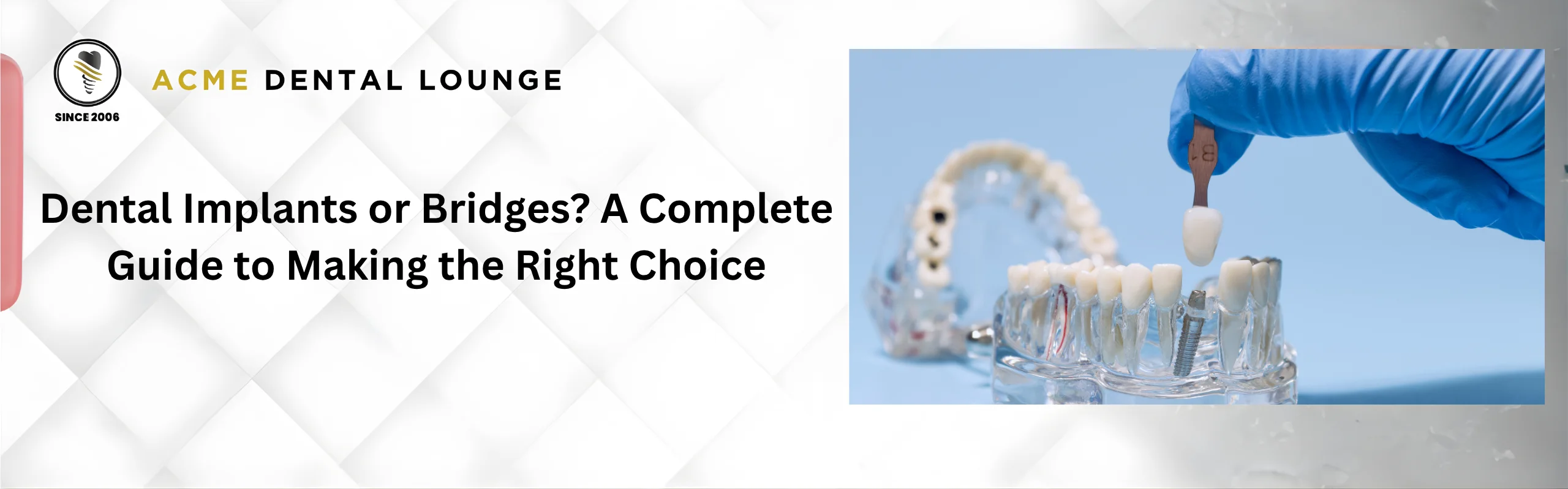
Dental Implants or Bridges? A Complete Guide to Making the Right Choice
Dental Implants vs. Bridges: Which Is Better for Missing Teeth?
Wondering whether to choose dental implants or bridges? Compare cost, durability, appearance, maintenance, treatment time, and long-term value to make the best decision.
Dental Implants vs. Bridges: Quick Answer
Dental Implants vs. Bridges: Quick Answer
If you’re looking for the best long-term solution for replacing missing teeth, dental implants are generally the preferred option. They offer exceptional durability, preserve jawbone health, and closely mimic natural teeth. However, dental bridges remain an excellent choice for patients seeking a faster, less invasive, or more affordable treatment.
The right choice depends on your oral health, bone density, budget, treatment timeline, and personal preferences.
Losing a Tooth? Here’s What You Need to Know
Missing teeth affect much more than your smile. They can impact:
- Chewing ability
- Speech
- Facial appearance
- Jawbone health
- Confidence
- Overall oral health
Modern dentistry offers two highly effective solutions:
- Dental Implants
- Dental Bridges
Both restore your smile, but they differ significantly in longevity, cost, maintenance, and overall benefits.
This guide explains everything you need to know before making your decision.
What Is a Dental Implant?
A dental implant is a titanium or zirconia post surgically placed into the jawbone to replace a missing tooth root.
After healing, a custom-made dental crown is attached to the implant.
Components of a Dental Implant
- Implant fixture
- Abutment
- Dental crown
Because implants fuse with the jawbone through osseointegration, they become a stable and long-lasting replacement for natural teeth.
What Is a Dental Bridge?
A dental bridge replaces one or more missing teeth using artificial teeth (pontics) supported by adjacent natural teeth or implants.
Traditional bridges require the neighboring healthy teeth to be reshaped to support dental crowns.
Dental Implants vs. Bridges: Comparison Table
|
Feature |
Dental Implants |
Dental Bridges |
|
Average Lifespan |
20–30+ years (often lifelong with proper care) |
10–15 years or even more with proper care |
|
Cost |
Higher upfront |
Lower upfront |
|
Jawbone Preservation |
Excellent |
Does not prevent bone loss |
|
Natural Appearance |
Excellent |
Very Good |
|
Treatment Time |
3–6 months |
2–3 weeks |
|
Surgery Required |
Yes |
No |
|
Adjacent Teeth Affected |
No |
Yes |
|
Maintenance |
Brush and floss normally |
Special flossing under bridge with water flosser |
|
Long-Term Value |
Excellent |
Moderate |
Cost Comparison
One of the biggest deciding factors is cost.
Dental Implants
Typical treatment includes:
- Implant placement
- Healing period
- Abutment
- Crown
Although implants cost more initially, they usually require fewer replacements over a lifetime.
Best for:
- Long-term investment
- Younger adults
- Patients seeking permanent solutions
Dental Bridges
A bridge generally costs less initially because surgery is not required.
However, bridges often need replacement after 10–15 years, increasing lifetime costs.
Best for:
- Budget-conscious patients
- Patients unable to undergo surgery
- Faster treatment needs
Durability: Which Lasts Longer?
Winner: Dental Implants
Implants integrate directly with the jawbone, making them extremely durable.
With excellent oral hygiene and routine dental visits, many implants last 25 years or more.
Bridges typically last around 10–15 years before replacement becomes necessary due to wear or decay affecting supporting teeth.
Appearance and Comfort
Both treatments produce natural-looking smiles.
However, implants often feel almost identical to natural teeth because they function independently.
Dental Implants
✔ Natural gum appearance
✔ Stable during eating
✔ No movement
✔ Excellent chewing ability
Dental Bridges
✔ Natural appearance
✔ Comfortable
✔ May feel slightly different from natural teeth
Jawbone Health
One of the biggest advantages of implants is bone preservation.
After tooth loss, the jawbone begins shrinking because it no longer receives stimulation from chewing.
Dental implants:
- Stimulate bone naturally
- Prevent bone loss
- Help maintain facial structure
Bridges replace only the visible tooth and do not stimulate the jawbone.
Maintenance Requirements
Caring for Dental Implants
Maintenance is straightforward:
- Brush twice daily
- Floss daily
- Use interdental brushes if recommended
- Visit your dentist every six months
Caring for Dental Bridges
Bridges require extra attention.
Food particles can collect beneath the artificial tooth.
Patients often need:
- Floss threaders
- Water flossers
- Interdental brushes
Good oral hygiene is essential to protect the supporting teeth.
Treatment Timeline
Dental Implant Timeline
- Consultation
- Implant placement
- Healing (3–6 months)
- Crown placement
Total treatment may take several months.
Dental Bridge Timeline
- Consultation
- Tooth preparation
- Impressions
- Final bridge placement
Most bridges are completed within two to three weeks.
Who Is a Good Candidate?
Dental Implants Are Ideal If You:
- Have healthy gums
- Have sufficient jawbone
- Do not smoke heavily
- Want a long-term solution
- Are medically fit for minor oral surgery
Dental Bridges Are Better If You:
- Prefer faster treatment
- Have limited bone support
- Want to avoid surgery
- Need a lower upfront investment
Pros and Cons
Dental Implants
Pros
- Extremely durable
- Preserve jawbone
- Natural appearance
- Protect surrounding teeth
- High long-term success rates
- Easy daily maintenance
Cons
- Higher initial cost
- Surgical procedure required
- Longer treatment time
Dental Bridges
Pros
- Faster treatment
- Lower upfront cost
- No surgery
- Excellent aesthetics
Cons
- Shorter lifespan
- Supporting teeth must be altered
- Does not prevent bone loss
- Requires additional cleaning
Which Option Offers Better Long-Term Value?
While implants typically require a larger initial investment, they often provide greater value over time due to:
- Longer lifespan
- Fewer replacements
- Better oral health outcomes
- Bone preservation
- Reduced impact on neighboring teeth
For many patients, implants have become the more cost-effective solution over decades.
However, bridges remain a reliable option when implants are not medically appropriate or when treatment time and budget are major considerations.
What Does Research Say?
Clinical research has consistently shown:
- Dental implant survival rates exceed 95% over 10 years in many healthy patients.
- Proper oral hygiene and regular dental check-ups significantly improve the longevity of both implants and bridges.
- Bone preservation around implants contributes to better long-term facial aesthetics and oral function.
Individual outcomes depend on overall health, smoking habits, oral hygiene, and adherence to professional dental care.
Frequently Asked Questions (FAQ)
Are dental implants better than bridges?
For most healthy adults seeking a long-term solution, yes. Implants generally last longer, preserve the jawbone, and do not require altering adjacent healthy teeth.
Can a bridge last as long as an implant?
Bridges can provide many years of reliable function, but implants typically have a longer lifespan when properly maintained.
Is getting an implant painful?
The procedure is performed under local anesthesia, and most patients report mild to moderate discomfort that subsides within a few days.
Who should avoid dental implants?
Patients with uncontrolled medical conditions, severe bone loss without grafting options, or those who cannot undergo oral surgery may not be suitable candidates. A comprehensive dental evaluation is essential.
Which option is more affordable?
Bridges usually have a lower upfront cost, while implants often provide greater long-term value because they require fewer replacements.
Can smokers get dental implants?
Smoking can reduce implant success rates and delay healing. Your dentist will evaluate your individual risk and may recommend quitting before treatment.
Highlights
What is better: a dental implant or a bridge?
Dental implants are generally considered the better long-term option because they preserve the jawbone, last longer, and function like natural teeth. Dental bridges remain an excellent choice for patients seeking faster treatment or lower upfront costs.
Which lasts longer?
Dental implants often last 20 years or more, while dental bridges typically last 10–15 years with proper care.
Which is less expensive?
Dental bridges usually cost less initially, but implants may provide greater long-term value due to their durability.
Which looks more natural?
Both treatments offer excellent aesthetics, but implants often provide the most natural appearance because they emerge from the gum similarly to natural teeth.
Conclusion
Choosing between a dental implant and a dental bridge is an important decision that should consider your oral health, budget, treatment timeline, and long-term goals. Dental implants are widely regarded as the gold standard for replacing missing teeth because of their longevity, bone-preserving benefits, and natural function. However, dental bridges continue to be a dependable solution for many patients, particularly when surgery is not an option or a quicker restoration is preferred.
The most appropriate treatment can only be determined after a thorough clinical examination, diagnostic imaging, and discussion with your dentist.
Ready to Restore Your Smile?
If you’re unsure whether a dental implant or bridge is right for you, schedule a consultation with an experienced restorative dentist. A personalized treatment plan can help you restore function, protect your oral health, and achieve a confident smile that lasts for years.for any query u can call 9923459984.