
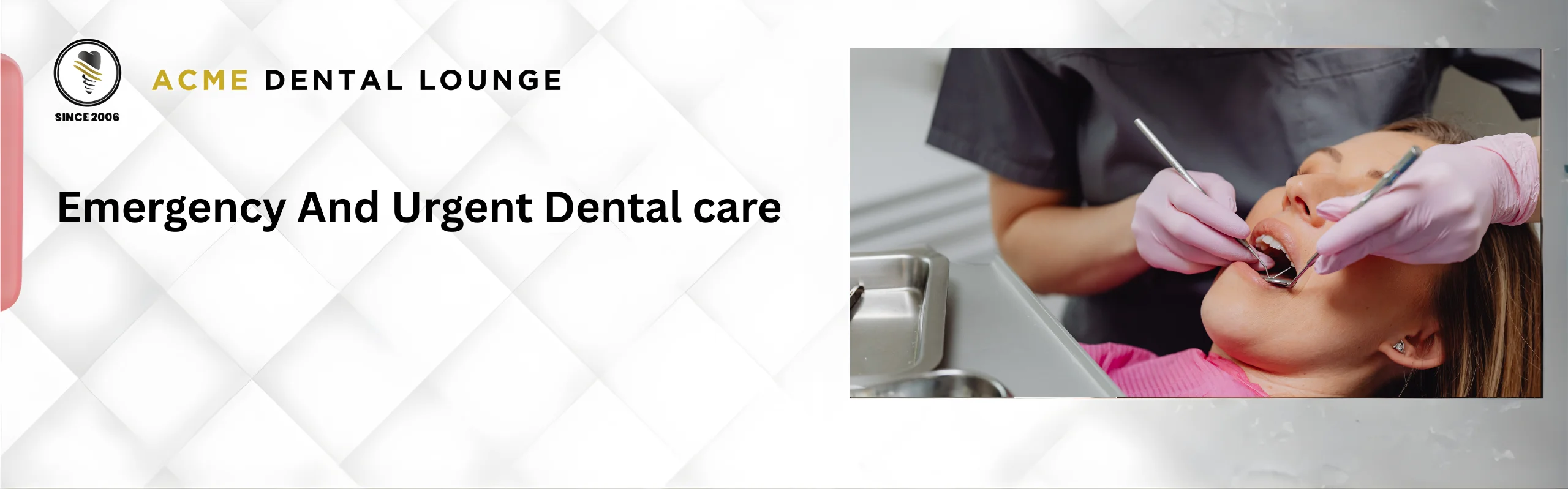
Emergency And Urgent Dental care
Dental emergencies rarely arise at convenient times. Whether it’s a sudden toothache in the middle of the night, a shattered tooth during a family dinner, or a knocked-out tooth from a sports event, knowing how to respond quickly and correctly can make the difference.
Understanding the difference between *urgent* and *emergency* dental care—and knowing what measures to take—can help protect your oral health and potentially save a tooth.
What Is a Dental Emergency?
A dental emergency is a situation that requires immediate attention to stop bleeding, relieve severe pain, or save a tooth. In some cases, it may even involve your overall health.
True Dental Emergencies Include:
1. Severe, persistent tooth pain
2. Uncontrolled bleeding from the mouth
3. A knocked-out (avulsed) permanent tooth
4. Facial swelling that affects breathing or swallowing
5. Signs of serious infection (fever, swelling spreading to the eye or neck, pus discharge)
6. Trauma to the jaw or facial bones
If you experience difficulty breathing, swallowing, or significant facial swelling, seek care at the nearest emergency room immediately. These symptoms can indicate a serious infection that may spread quickly.
Common Dental Emergencies
1) knocked out tooth
- Handle only by the crown
- Clean thoroughly with saline.
- See a dentist within 30-60 minute
How to Deal with a Knocked-Out Tooth (Avulsed Tooth)
The tooth has the best chances of survival if it is replaced within 30-60 minutes of extraction.
Step-by-Step Procedure for a Knocked-Out Tooth
– Stay cool and act immediately.
– Hold the tooth by the crown.
– Avoid touching or washing the roots.
– If dirty, rinse gently.
– Use saline or milk.
– If neither is available, a quick rinse in clean water may suffice.
– Do not use chemicals or soap.
– Try to place the tooth back in.
– Bite down softly on a clean gauze or cloth.
– If reinsertion is not an option, store it correctly.
Top choices:
Cold milk.
Solution of saline
inside the cheek (only if the individual is mature enough and aware)
Avoid keeping in water.
The mouth-body connection isn’t just holistic theory-it’s well documented.
2) Broken tooth
Even a small crack can expose the inner layers of the tooth, increasing the risk of infection.
Rinse your mouth thoroughly with warm water.
Apply a cold compress to relieve swelling.
Visit the dentist as soon as possible.
3) Dental Abscess
A dental abscess is a serious infection that can spread if untreated.
Symptoms may include:
-Severe, throbbing pain
-Swelling in the gums or face
– Fever
-Bad taste in the mouth
-Pus discharge
This condition requires urgent dental care and sometimes antibiotics. Do not delay treatment.
4) Severe toothache
Tooth ache can be an indication of infection, decay, or nerve irritation.
What to Do:
1. Rinse your mouth with warm saltwater.
2. Gently floss to remove any trapped food.
3. Take over-the-counter pain medicines such as ibuprofen or acetaminophen (if medically appropriate).
4. Avoid putting aspirin directly on the gum.
If the discomfort continues or worsens, see a dentist as soon as possible.
How to prevent dental emergencies
While not all emergencies are avoidable, many are preventable with careful treatment.
1.Brush twice a day using fluoride toothpaste.
2. Floss every day.
3. Wear a mouthguard during sports.
4. Avoid chewing ice, hard candy, and popcorn kernels.
5. Don’t use your teeth as tools to open bottles or tear packaging.
6. Maintain frequent dental check-ups.
7. Treat cavities early—do not wait for pain.
‘’Prevention is always easier — and less costly — than emergency treatment’’
The Importance of Acting Quickly
Dental problems rarely resolve on their own. Infections can spread, minor cracks can worsen, and pain often intensifies without treatment.
Seeking care promptly can:
- Save a tooth
- Prevent infection from spreading
- Reduce treatment costs
- Minimize pain and complications
If you’re unsure whether your situation is an emergency, it’s always safer to visit your dentist and ask. Many practices offer same-day appointments for urgent cases.
Do’s and Don’ts After a Tooth Extraction
Do’s
- Bite gently on gauze for 30–60 minutes to stop bleeding
- Rest and keep your head elevated
- Eat soft foods (yogurt, soup, mashed potatoes, khichdi)
- Take prescribed or recommended pain medication as directed
- Keep the area clean—gently rinse after 24 hours with salt water
Don’ts
- Do not smoke or vape for at least 72 hours (major cause of dry socket)
- Do not use straws for 48–72 hours
- Avoid spitting forcefully
- Don’t touch the extraction site with fingers or tongue
- Avoid hard, crunchy, or spicy foods
- Don’t brush directly over the site for the first 24 hours
- Call your dentist immediately if you have:
- Severe pain after 2–3 days
- Excessive bleeding
- Swelling that worsens
- Fever or bad taste/smell (possible infection)
Conclusion
Dental emergencies can be stressful and painful, but knowing how to respond can protect your oral health and give you peace of mind. Quick action, proper first aid, and timely professional care are key to preventing long-term damage.
If you ever find yourself in doubt, remember: when it comes to dental health, it’s better to seek care sooner rather than later.For any query you can contact Acme dental lounge,Aundh,Pune ,Contact -9923459984