

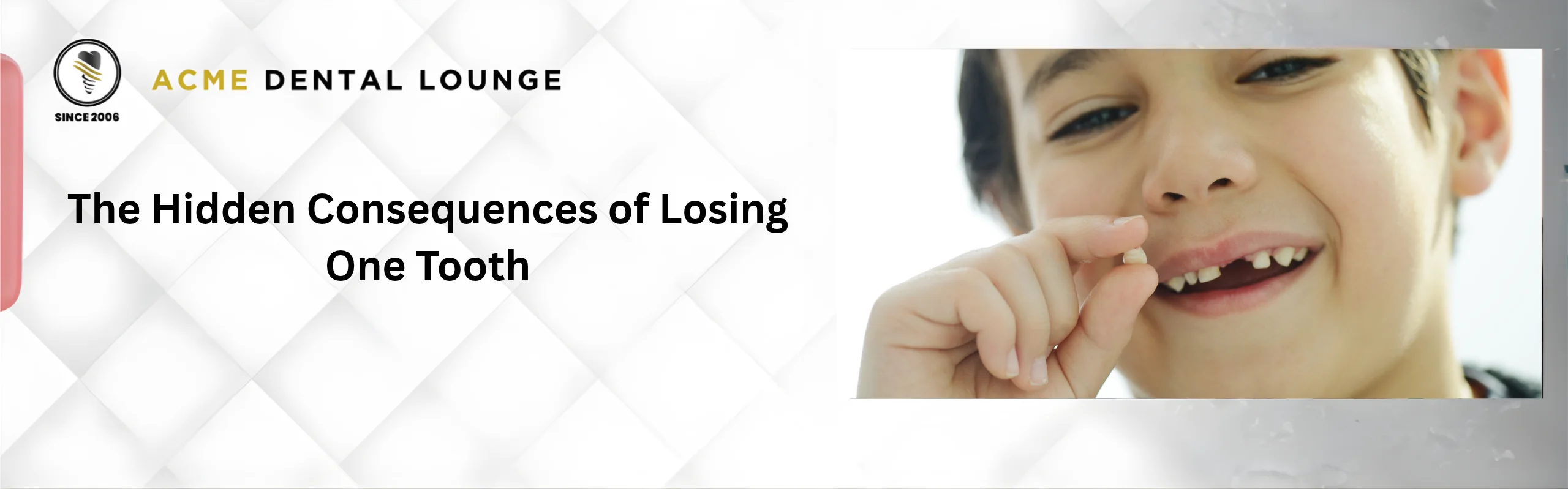
The Hidden Consequences of Losing One Tooth
Whilst losing a tooth may seem to be a small issue, especially if it is located at the back of your mouth that doesn’t show when you smile, losing even one tooth can cause issues with your chewing, the positioning of your other teeth, your jawbone and general oral health.
Many individuals will leave a gap due to feeling comfortable, no pain and feeling that one gap won’t cause too many issues. However, the consequences can vary depending on the tooth lost, your bite, gum health and general dental health.
By understanding the hidden consequences, we can help you make informed decisions regarding your dental health.
What Can Happen If You Lose One Tooth?
Quick Answer: Can Losing One Tooth Affect Other Teeth?
Yes. Losing one permanent tooth can affect how you chew, cause your adjacent teeth to shift into the gap and cause changes to your jawbone. Depending on the location, losing one tooth could also cause an issue with your smile, speech and bite.
However, everyone will experience these issues at different rates. An assessment with your dentist can help determine if a gap needs to be filled and what treatment should be carried out.
7 Hidden Consequences of Losing One Tooth
1. Your Other Teeth Can Shift
Your teeth work together to help give you a balanced bite.
When one tooth is lost, your adjacent teeth may gradually shift into the gap. The tooth opposite to the gap may also shift downwards or upwards.
This can cause an impact on your teeth alignment and how your top and bottom teeth fit together.
Why Does This Matter?
Teeth can become overcrowded and uneven.
Food may become trapped in the gaps.
Difficulties cleaning between your teeth.
Changes to your bite.
If you lose a molar in the lower jaw and don’t fill the gap, your adjacent teeth may shift gradually into the gap causing complications in the future.The amount of shifting can vary.
2. Your Jawbone Can Gradually Reduce
One of the less obvious consequences. Your natural tooth root transfers the forces of chewing to your jawbone. Once your tooth is removed, the area will no longer receive the same stimulation. This can cause the supporting jawbone to reduce in height and width. This is known as bone resorption.
Why Does This Matter?
Reduced amount of bone available for an implant.
Sometimes extra treatment may be required such as bone grafting.
Changes to your bone and gum can cause issues with certain restorations fitting.
Bone changes can occur after extraction. However, the amount will vary per individual.
A dental implant can help reduce the amount of bone loss locally by transferring the forces to your jawbone, however, not all bone loss can be prevented.
3. Chewing Issues
Whilst you may not notice much difference if you lose a front tooth, losing a molar can cause more issues.
Molars are designed to crush and grind your food. By losing a molar you may begin to chew on the opposite side without realising.
This can cause your teeth to become uneven over time and cause certain foods to become uncomfortable to eat.
You may find that:
- Hard/fibrous foods are difficult to chew.
- Preference to chew on one side.
- Food gets trapped around the gap.
- Discomfort with the forces placed on your remaining teeth.
Not all missing teeth will cause chewing issues but if the tooth is an important part of your bite it is important to properly assess.
4. Changes To Your Bite
Your bite is determined by how your top and bottom teeth fit together.
By losing a tooth, this can cause changes to your bite. The remaining teeth may experience different forces and in some cases the opposing tooth may move into the gap.
Depending on where the tooth was lost and how many teeth are missing, this can cause:
- Unbalanced contact between teeth.
- Difficulties biting.
- Increased wear.
- Issues with the stability of your dental arch.
However, not all missing teeth will cause issues with your jaw joint and not all adjacent teeth will be affected. It will depend on your current bite, location of the gap and other dental factors.
5. Smile Impact
If you lose a front tooth, this will generally be very obvious. However, losing a tooth at the back can still cause issues with your smile in some cases.
Some individuals may feel uncomfortable smiling, speaking in public or taking photos. Others may feel self-conscious when speaking.
Missing teeth can cause issues with your speech, especially if you lose a front tooth. Certain sounds may become difficult to pronounce.
Modern treatments can help restore your appearance and function. However, the best option will depend on your oral health, expectations and budget.
6. Food Gets Trapped And Gum Issues
By losing a tooth, a gap can be created causing changes to how food moves around your mouth. If your adjacent teeth shift and the surrounding gum changes shape, food may get trapped in hard to clean areas.
Not all food trapping will cause gum issues but if plaque continues to build up, this can increase the chances of inflamed gums. This can cause your remaining teeth to become more prone to decay.
Look out for-
- Food is constantly getting trapped.
- Bleeding/swollen gums.
- Persistent bad breath.
- Difficulties cleaning between the adjacent teeth.
- Keep the area clean and book an appointment with your dentist.
7. Dalayed Treatment Can Cause Complications
Whilst you may not need an implant straight away, if you don’t book an assessment and understand your options, changes may have occurred to your bone, gums and teeth.
For example, if you initially had enough bone to place an implant but changes occur during healing. Depending on your individual circumstances further planning or bone grafting may be required to place an implant.
Your teeth may also shift causing issues with the gap.
The key point here is that by booking an early assessment you will have more information on your options. Not all missing teeth will need to be filled and not all gaps will cause issues.
Do I Have To Fill The Gap?
This will depend on which tooth is lost, your bite, surrounding teeth and personal preferences.
The American College Of Prosthodontists recommends an individualised approach to filling a single missing molar. Consideration should be given to the likely benefits, risks, long term maintenance and costs.
If the missing tooth is affecting your chewing, appearance, dental stability and other important functions your dentist may recommend filling the gap. In certain cases monitoring the gap may be a suitable option.
The best decision will be made after an assessment with your dentist. If required, x-rays may be taken.
What Are My Options For Filling The Gap?
There are a number of options available. Each has their own pros and cons.
Dental Implant With Crown
A dental implant is placed into the jawbone to support a bespoke crown.
Pros:
- No support from adjacent teeth.
- Helps support the bone locally by transferring the chewing forces.
- Can look natural.
- Don’t need to prepare healthy adjacent teeth to support a traditional bridge.
Considerations:
- Surgery required.
- Good bones and healthy gums are important.
- Treatment may take several months.
- Healing, maintenance, medical history and costs must be considered.
Not always the best option for everyone. Your dentist will need to assess if you are suitable.
Traditional Bridge
A dental bridge can be used to fill the gap. An artificial tooth is attached to the adjacent teeth.
Pros:
- Fixed solution.
- Often quicker treatment than an implant.
- May be suitable if adjacent teeth need crowning.
Considerations:
- Usually need to prepare the supporting teeth.
- No root to replace.
- Care is required to clean underneath.
- Supporting teeth and gums need regular monitoring.
Removable Partial Denture
A removable partial denture can be used to replace one or more teeth. It can be removed to clean.
Pros:
- Maybe a more cost effective option.
- Replace multiple teeth.
- Often no surgery is required.
Considerations:
- Needs to be removed to clean.
- May feel less stable.
- Regular checks are required to ensure it fits well.
What Is The Best Option For Me?
There isn’t one answer
Your dentist will consider the location of the gap, health of adjacent teeth, bone availability, medical history, expectations and budget to decide what treatment is best for you.
What Should I Do?
If you have recently lost a tooth or had it extracted, you can do the following:
Book an assessment. Ask your dentist to assess the gap, your bite and surrounding teeth and gums.
Discuss your options. Understand the pros, cons, expected treatment time and maintenance.
Practice good oral hygiene. Brush twice a day with fluoride toothpaste. Clean between your teeth daily.
Follow your dentist’s advice. Ensure the area is protected whilst it heals.
Don’t make a decision based on cost. Consider the long term health of your supporting teeth, comfort and maintenance.
If you lost the tooth due to gum disease or severe decay it is important to treat the underlying issue.
Why Choose Us?
When you lose a tooth it is important to understand how the gap is affecting your bite, adjacent teeth, gums and long term oral health.
At Acme Dental Lounge, Aundh, Pune, we can help you discuss your concerns and find a suitable solution.
Whether you decide on an implant, fixed bridge or removable partial, we can have an informed discussion to help you understand your options.
Book A Dental Consultation
Clinic Name: Acme Dental Lounge
Location: Aundh, Pune
Phone Number: 9923459984
Don’t wait until you experience discomfort. By booking an assessment you can understand your options.
FAQs
- What Happens If I Don’t Fill The Gap?
This will depend on which tooth you lost and your current bite. It can cause your adjacent teeth to shift, reduce your efficiency when chewing, cause movement of the opposite tooth and cause bone resorption at the extraction site. Some people won’t experience many changes. An individual assessment is important. - Will My Adjacent Teeth Become Loose?
Not necessarily. However, if your tooth was lost due to gum disease this may indicate that the supporting tissues of your other teeth are also affected. Some cases may cause changes to your teeth and bite. Your dentist can assess the cause. - How Long Can I Leave The Gap?
There isn’t a set time for everyone. It will depend on the tooth, healing, bone and gum health and what treatment is required. It would be a good idea to book an assessment early. - Is An Implant Better Than A Bridge?
An implant doesn’t require any healthy adjacent teeth to be prepared. It can also help support the bone around the area. A bridge may be suitable if your adjacent teeth need crowning or an implant isn’t suitable. The best option will depend on your individual circumstances. - Can A Back Tooth Affect My Face?
Losing one back tooth generally won’t cause any obvious changes to your face. However, bone resorption can occur. Larger amounts of tooth loss can cause changes to your face. - Will I Always Lose Bone?
After tooth extraction bone remodelling and resorption is common as there is no natural tooth root. The amount will depend on the individual. An implant can help support the bone locally but won’t stop all changes. - Can I Eat Normally With One Missing Molar?
Many people can eat normally, especially if the remaining teeth are healthy. However, some may find it difficult to chew harder foods. You may also begin to favour one side. If you are finding it uncomfortable to chew, book an assessment. - Do I Need To Fill The Gap If It Doesn’t Hurt?
Not necessarily. Whilst you may not experience any discomfort, changes may occur to your teeth, bone and chewing. Your dentist can help you weigh up the pros and cons. - What Is The Cheapest Way To Fill The Gap
This will depend on what restoration is required, materials used, surrounding teeth and any extra treatment. A removable partial may be cheaper than a bridge or implant however long term maintenance and comfort should also be considered. We can provide you with a personalised treatment plan and estimate. - Where Can I Get A Consultation For A Missing Tooth In Aundh, Pune?
Contact us on 9923459984. At Acme Dental Lounge
Conclusion-
Losing one tooth may not seem like a big issue if you aren’t experiencing any pain or the gap isn’t obvious. However, your teeth work together and losing one can cause issues with your chewing, teeth alignment, supporting bone and oral health.
The good news is there are a number of treatment options available. Depending on your needs a dental implant, fixed bridge or removable partial may be suitable. In certain cases monitoring may be suitable.
The key thing to understand is what the missing tooth means for your individual dental health.
Have you lost a tooth and been putting off treatment?
Contact us on 9923459984 to discuss your options.