Experience the advancement of dentistry, Prior pre-paid booking is mandatory for patient and doctor convenience .To get in touch with the best dentist in Aundh Pune. Call +91-9923459984

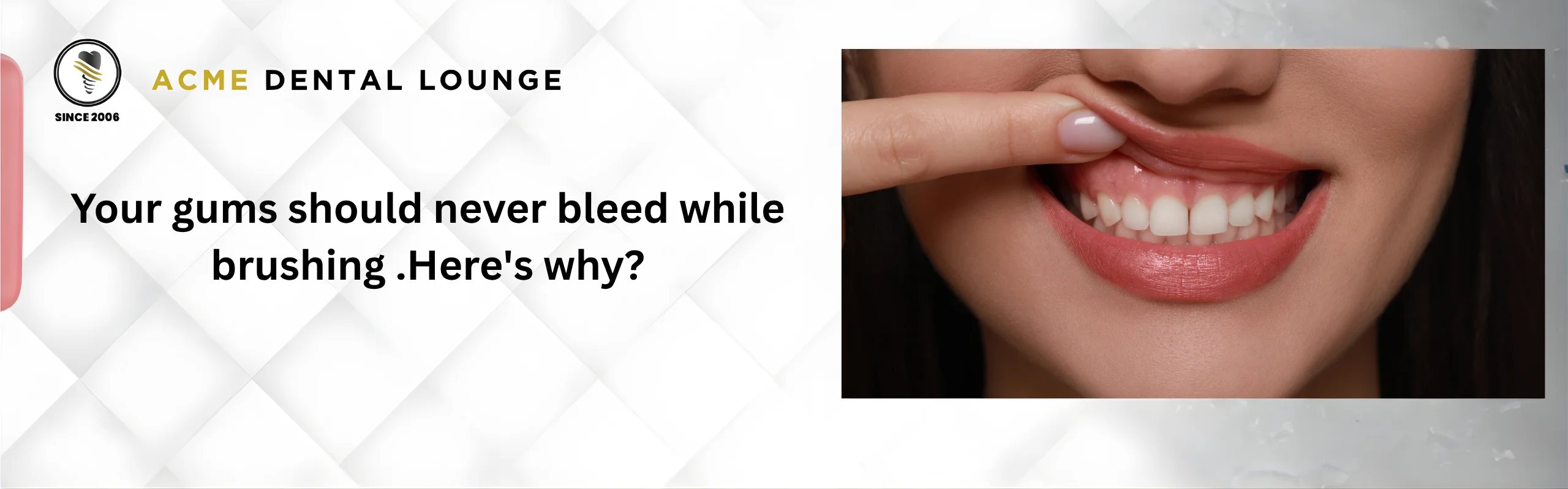
Your gums should never bleed while brushing .Here’s why?

Healthy gums generally should not bleed during routine brushing or flossing. Bleeding gums are often a sign of inflammation, with plaque buildup and gingivitis being among the most common causes.

Other possible causes include brushing too aggressively, inconsistent flossing, gum disease, poorly fitting dental restorations, smoking or tobacco use, certain medications, hormonal changes, and some systemic health conditions.

If your gums bleed regularly—even if there is no pain—it’s worth finding out why.

Bleeding isn’t something your gums should simply “get used to.” It can be an early warning sign that your gums need better care or professional attention.

Do Your Gums Bleed When You Brush?

You finish brushing, rinse your mouth, and notice a little pink or red in the sink.

Maybe you think:

“I probably brushed too hard.”

Or:

“My gums have always done that.”

But here’s something important:

Bleeding gums are not considered a normal sign of healthy gums.

Occasional bleeding can happen for several reasons, but recurring bleeding—particularly during brushing or flossing—is often associated with gum inflammation.

The good news?

Early gum problems are often manageable when addressed promptly.

Understanding what’s causing the bleeding is the first step toward healthier gums.


What Does It Mean When Your Gums Bleed?

Bleeding usually indicates that the gum tissue is inflamed or irritated.

One of the most common reasons is plaque.

Plaque is a sticky film of bacteria that continuously forms on your teeth. If it isn’t removed effectively, it can accumulate around the gumline.

The bacteria in plaque can trigger an inflammatory response.

As the gums become inflamed, they may appear:

  • Red
  • Swollen
  • Tender
  • Shiny
  • More likely to bleed when touched

This early stage of gum disease is called gingivitis.

If untreated, gum inflammation can progress to periodontitis, a more advanced form of gum disease that can damage the tissues and bone supporting your teeth.

According to the CDC, about 42% of adults aged 30 and older in the United States have some form of periodontitis, while the prevalence increases considerably with age.

That makes gum health something worth taking seriously—not just for your smile, but for your long-term oral health.

7 Common Reasons Your Gums Bleed While Brushing

1. Plaque Buildup and Gingivitis

This is one of the most common explanations for bleeding gums.

When plaque remains around the gumline, the gums can become inflamed.

You may notice:

  • Bleeding during brushing
  • Bleeding when flossing
  • Red gums
  • Puffy gums
  • Mild tenderness
  • Bad breath

The good news is that gingivitis is generally reversible with effective plaque control and professional dental care when needed.

What can help?

  • Brush twice daily with fluoride toothpaste.
  • Clean between your teeth every day.
  • Pay attention to the gumline.
  • Schedule regular dental examinations and professional cleanings.


2. You’re Not Cleaning Between Your Teeth

Brushing cleans the surfaces of your teeth, but it doesn’t completely clean the spaces between them.

Food debris and plaque can accumulate between teeth and along the gumline.

If you rarely floss or use interdental cleaners, your gums may become inflamed.

You might notice bleeding when you finally start flossing again.

This doesn’t necessarily mean flossing is damaging your gums.

It may mean those areas need consistent cleaning.

The goal is not to floss once and stop because you see blood.

Instead, develop a consistent daily interdental-cleaning routine and seek professional advice if bleeding continues.


3. You May Be Brushing Too Hard

More pressure does not equal better cleaning.

Aggressive brushing can irritate the gum tissue and contribute to gum recession or abrasion around the teeth.

If you’re pressing hard enough that the toothbrush bristles flatten against the teeth, you may be using excessive force.

Try this:

  • Choose a soft-bristled toothbrush.
  • Use gentle, controlled movements.
  • Hold the toothbrush lightly.
  • Spend enough time cleaning all tooth surfaces.
  • Avoid aggressive horizontal scrubbing.

Your goal is to remove plaque—not scrub your gums.

4. You May Already Have Gum Disease

Persistent bleeding shouldn’t be dismissed, particularly when other symptoms are present.

Possible signs of gum disease include:

  • Bleeding gums
  • Red or swollen gums
  • Persistent bad breath
  • Gum recession
  • Tender gums
  • Loose teeth
  • Changes in the way your teeth fit together
  • Pus around the gums
  • Increasing spaces between teeth

Periodontitis can damage the structures supporting your teeth and may eventually contribute to tooth loss.

Importantly, gum disease doesn’t always cause significant pain.

That’s one reason regular dental checkups matter.

You shouldn’t wait until your gums hurt before getting them examined.

5. Hormonal Changes Can Affect Your Gums

Hormonal changes can make gum tissue more sensitive to plaque.

This can occur during periods such as:

  • Puberty
  • Pregnancy
  • Menstruation
  • Menopause

For example, pregnancy-related hormonal changes can increase the gums’ response to plaque, leading to swelling, tenderness, and bleeding.

If your gums have started bleeding more frequently during pregnancy, don’t simply stop brushing or flossing.

Instead, discuss your symptoms with your dentist and maintain appropriate oral hygiene.

6. Certain Medications or Health Conditions May Play a Role

Bleeding gums aren’t always caused by plaque alone.

Certain medications can influence bleeding or oral tissues, while some medical conditions can affect gum health or bleeding tendency.

If you notice unusual, heavy, persistent, or unexplained bleeding, particularly bleeding in other parts of the body, speak with your healthcare professional.

Don’t stop prescribed medication simply because your gums are bleeding.

Your dentist and physician can help determine whether medication or another health issue may be contributing.

7. Smoking and Tobacco Use Can Harm Gum Health

Tobacco use is a major risk factor for gum disease.

Smoking can affect the tissues surrounding your teeth and is associated with a higher risk of periodontal disease and poorer treatment outcomes.

One interesting point is that smokers may not always see obvious gum bleeding because smoking can reduce blood flow and mask some signs of inflammation.

So:

No bleeding does not automatically mean healthy gums.

If you use tobacco, quitting is one of the most valuable steps you can take for your oral and overall health.

Is It Normal for Gums to Bleed When You Floss?

This is a common question.

If your gums bleed every time you floss, it shouldn’t simply be considered normal.

Bleeding may indicate inflammation caused by plaque buildup.

However, technique matters.

If you’re snapping the floss aggressively into your gums, you can injure the tissue.

Correct flossing technique:

  1. Gently guide the floss between your teeth.
  2. Curve it around one tooth in a “C” shape.
  3. Move it gently up and down.
  4. Clean both sides of each tooth.
  5. Avoid forcing or snapping the floss into the gums.

If you’re unsure about your technique, ask your dentist or dental hygienist to demonstrate it.

Should You Stop Brushing If Your Gums Bleed?

No—not usually.

Stopping oral hygiene because your gums bleed can allow plaque to accumulate even more, potentially making inflammation worse.

Instead:

  • Continue brushing gently twice a day.
  • Use a soft-bristled toothbrush.
  • Clean between your teeth daily.
  • Avoid aggressive brushing.
  • Schedule a dental checkup if bleeding persists.

Think of bleeding as a signal to investigate, not a reason to abandon oral hygiene.

How to Stop Your Gums From Bleeding

The right solution depends on the cause.

But these everyday habits can help support healthier gums.

1. Brush Twice a Day

Use fluoride toothpaste and a soft-bristled toothbrush.

Focus especially on the gumline, where plaque commonly accumulates.

2. Clean Between Your Teeth Every Day

Choose the method that works for you:

  • Dental floss
  • Interdental brushes
  • Water flossers
  • Other dentist-recommended interdental cleaners

The important thing is consistent removal of plaque from areas your toothbrush cannot reach effectively.

3. Don’t Brush Aggressively

Gentle brushing is more appropriate than forceful scrubbing.

4. Don’t Ignore Persistent Bleeding

If your gums continue to bleed despite improving your oral hygiene, schedule a dental examination.

You may need professional cleaning or treatment for underlying gum disease.

5. Have Regular Dental Checkups

Professional examinations can identify gum inflammation and other oral-health problems before they become more advanced.

Your dentist can also assess your brushing and interdental-cleaning technique.


Can Bleeding Gums Lead to Tooth Loss?

Untreated advanced gum disease can contribute to tooth loss.

Here’s how it can happen:

Plaque buildup → gum inflammation → periodontal infection → damage to supporting tissues and bone → tooth becomes less stable → potential tooth loss

This process does not usually happen overnight.

That’s why identifying gum problems early is so important.

The earlier inflammation is addressed, the better the opportunity to protect the tissues supporting your teeth.

Bleeding Gums vs. Healthy Gums

Healthy Gums

Inflamed Gums

Usually pink or naturally pigmented

May appear redder than usual

Firm

Swollen or puffy

Fit closely around teeth

May look enlarged

Usually don’t bleed during routine cleaning

May bleed when brushing or flossing

Minimal tenderness

May feel tender

No persistent bad breath from gum disease

Bad breath may occur

Stable gumline

Recession may develop

Important: Healthy gum color naturally varies between individuals and ethnic backgrounds. Color alone isn’t a reliable way to diagnose gum disease.

When Should You See a Dentist for Bleeding Gums?

Book a dental appointment if your gums:

  • Bleed frequently
  • Bleed every time you brush
  • Bleed every time you floss
  • Look swollen or red
  • Feel tender
  • Have started receding
  • Produce persistent bad breath
  • Have pus around the teeth
  • Are accompanied by loose teeth
  • Cause discomfort while chewing

A dentist may evaluate your gums by checking:

  • Plaque and tartar buildup
  • Gum inflammation
  • Pocket depths
  • Gum recession
  • Tooth mobility
  • Bone support
  • Existing dental restorations
  • Your overall oral hygiene

Depending on your symptoms, dental X-rays may also be recommended to evaluate supporting bone.

What Happens During a Gum Disease Checkup?

Many patients worry that a gum examination will be complicated or painful.

Usually, the dentist begins with a visual examination and checks the condition of your gums.

They may gently measure the spaces between your gums and teeth using a periodontal probe.

This helps determine whether there are periodontal pockets that require treatment.

If gum disease is diagnosed, treatment depends on its severity.

It may include:

  • Professional dental cleaning
  • Improved home-care instructions
  • Scaling and root planing
  • Periodontal maintenance
  • Treatment of contributing factors
  • Referral to a periodontist for advanced cases

The earlier gum disease is detected, the more straightforward management may be.

Does Professional Deep Cleaning Stop Bleeding Gums?

If plaque and tartar buildup are contributing to gum inflammation, professional cleaning can be an important part of treatment.

For patients with periodontal disease, a deeper cleaning procedure called scaling and root planing may be recommended.

This treatment removes plaque and calculus from above and below the gumline and smooths affected root surfaces.

However, professional cleaning isn’t a substitute for daily oral hygiene.

Think of it as a combination:

Professional care + consistent home care = healthier gums

What Happens If You Ignore Bleeding Gums?

You might think:

“It’s only a little blood. I’ll deal with it later.”

The problem is that early gum disease can be easy to overlook because it may cause little or no pain.

Ignoring persistent bleeding can allow inflammation to continue.

Over time, untreated periodontal disease can damage the tissues and bone supporting your teeth.

That’s why bleeding gums should be treated as a warning sign rather than a normal part of brushing.

Can Bleeding Gums Be Prevented?

In many cases, you can significantly reduce your risk of gum inflammation through consistent oral care.

Build these habits:

Morning:
Brush with fluoride toothpaste.

During the day:
Drink water regularly and avoid constantly grazing on sugary foods.

Evening:
Brush again and clean between your teeth.

Regularly:
Visit your dentist for examinations and professional cleaning based on your individual needs.

Long term:
Avoid tobacco and address habits or medical factors that may affect your gum health.

Small habits repeated every day are much more powerful than occasional intensive cleaning.

Frequently Asked Questions About Bleeding Gums

Why do my gums bleed when I brush?

The most common reason is inflammation caused by plaque buildup, often associated with gingivitis. Brushing too aggressively, gum disease, hormonal changes, certain medications, and other factors can also contribute.

Are bleeding gums a sign of gingivitis?

They can be. Bleeding during brushing or flossing is a common sign of gingival inflammation. Other signs include red, swollen, or tender gums.

Should healthy gums bleed when brushing?

Healthy gums generally should not bleed during routine brushing. Repeated bleeding is worth discussing with a dentist.

Is it okay to floss if my gums bleed?

Generally, you should continue gentle daily interdental cleaning rather than abandoning it. However, if bleeding persists or is significant, have your gums evaluated by a dentist.

How can I stop my gums from bleeding naturally?

Improve daily plaque removal by brushing gently with a soft-bristled toothbrush and cleaning between your teeth. If bleeding continues, professional dental care may be necessary because home remedies cannot treat every cause of gum bleeding.

Can brushing too hard make your gums bleed?

Yes. Excessive brushing pressure can irritate gum tissue and contribute to recession or wear. Use a soft-bristled toothbrush and gentle pressure.

Can gum disease cause bleeding without pain?

Yes. Gum disease can cause bleeding and inflammation without significant pain. This is one reason regular dental examinations are important.

How long does it take for bleeding gums to improve?

It depends on the cause and severity. Mild plaque-related inflammation may improve with consistent oral hygiene, but persistent bleeding should be evaluated rather than relying on a specific timeline.

Can vitamin deficiency cause bleeding gums?

Certain nutritional deficiencies can affect gum and oral health, but plaque-related inflammation is a much more common explanation for bleeding gums. If bleeding is unusual, severe, or accompanied by other symptoms, discuss it with a healthcare professional.

Can bleeding gums cause bad breath?

Yes. Gum inflammation and periodontal disease can contribute to persistent bad breath. However, bad breath has many possible causes.

When is bleeding from the gums an emergency?

Bleeding that is heavy, difficult to control, associated with significant swelling, severe pain, fever, or other concerning symptoms requires prompt professional assessment. Unexplained bleeding elsewhere in the body should also be discussed with a healthcare professional.


The Bottom Line: Don’t Ignore Bleeding Gums

Seeing blood when you brush your teeth may seem like a small issue.

But your gums are telling you something.

Healthy gums generally should not bleed during routine brushing and flossing.

In many cases, bleeding is caused by plaque-related inflammation and can improve with better oral hygiene and appropriate professional care. But persistent bleeding can also be a sign of periodontal disease or another issue that needs attention.

The important thing isn’t to panic.

It’s to pay attention.

If your gums have been bleeding repeatedly, don’t wait for pain to appear. A simple dental examination can help identify the cause and prevent a small problem from becoming a bigger one.

Ready to take better care of your gums?

Schedule a dental checkup today and find out why your gums are bleeding. Early attention can help protect your gums, supporting bone, and natural teeth for years to come.For any query visit Acme Dental Lounge or call us -9923459984